
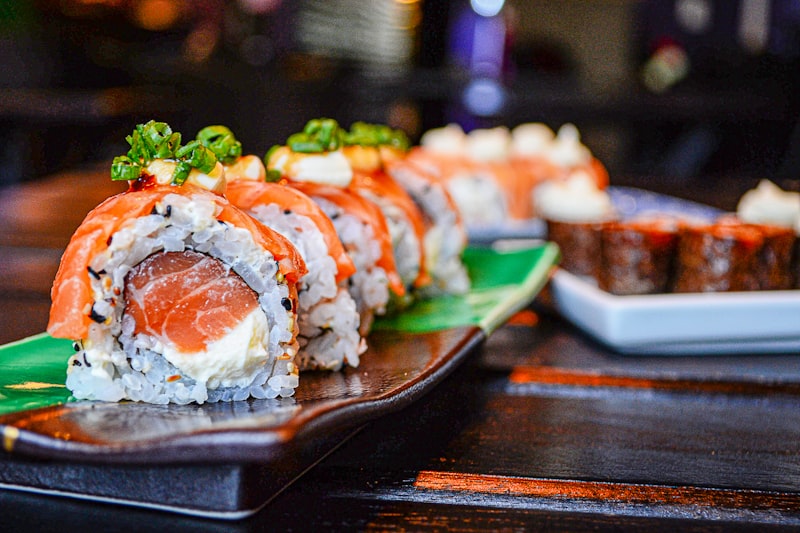
Sushi Savvy: Essential Japanese Phrases for Ordering Like a Pro
Craving melt-in-your-mouth tuna or perfectly crafted salmon nigiri? Venturing into the world of Japanese sushi is an adventure for your taste buds, but navigating the ordering process can feel intimidating if you don't speak the language. Fear not! This comprehensive guide will equip you with essential Japanese phrases and etiquette tips, transforming you from a bewildered tourist into a confident sushi connoisseur. Get ready to order sushi like a pro and impress your fellow diners!
Mastering the Basics: Essential Greetings and Politeness
Before diving into specific sushi types, mastering basic Japanese greetings and polite phrases is crucial. Politeness is highly valued in Japanese culture, and showing respect will go a long way in enhancing your dining experience.
-
"Konnichiwa" (こんにちは): Hello (used during the daytime). This is your go-to greeting when entering the restaurant.
-
"Irasshaimase!" (いらっしゃいませ!): Welcome! This is what the staff will enthusiastically shout when you enter. No need to respond; just acknowledge with a nod or smile.
-
"Sumimasen" (すみません): Excuse me/Sorry. This versatile phrase is used to get the attention of the staff, apologize, or express regret. Use it when you want to call a server over.
-
"Arigato gozaimasu" (ありがとうございます): Thank you. Express your gratitude after your meal or for excellent service.
-
"Onegaishimasu" (お願いします): Please. This is the magic word to use when ordering. It's often attached to the end of your order.
-
"Dozo" (どうぞ): Here you go/Please go ahead. You might hear this when someone offers you something.
-
"Oishii desu" (美味しいです): It's delicious! A great way to compliment the chef and show your appreciation.
Ordering Your Sushi: Key Phrases and Vocabulary
Now, let's get to the heart of the matter: ordering your sushi! These phrases will help you navigate the menu and communicate your preferences effectively.
Indicating Your Order
-
"(Sushi name) o kudasai" ((寿司の名前)をください): "(Sushi name), please." This is the most basic and widely used phrase for ordering. Simply replace "(Sushi name)" with the type of sushi you want. For example: "Maguro o kudasai" (Tuna, please).
-
"(Sushi name) wo onegaishimasu" ((寿司の名前)をお願いします): "(Sushi name), please." A slightly more polite version of the above.
-
"Kore wa nan desu ka?" (これは何ですか?): "What is this?" Use this when you see something on the menu you don't recognize. Pointing is helpful.
-
"Osusume wa nan desu ka?" (おすすめは何ですか?): "What do you recommend?" This is a great way to discover local specialties or seasonal delicacies. Be prepared for the server to suggest several options!
-
"Omakase" (おまかせ): "Chef's choice." If you're feeling adventurous, leave it up to the chef! This indicates that you trust their judgment and want them to prepare a selection of their best sushi. Be sure to indicate a budget if you have one.
Specifying Quantity
-
"Hitotsu" (一つ): One (general counter for items).
-
"Futatsu" (二つ): Two (general counter for items).
-
"Mittsu" (三つ): Three (general counter for items).
-
"Ippon" (一本): One (for long, cylindrical items like a roll).
-
"Nihon" (二本): Two (for long, cylindrical items like a roll).
-
"Sanbon" (三本): Three (for long, cylindrical items like a roll).
-
"(Number) o kudasai" ((数)をください): "(Number), please." Combine these with the appropriate counter to specify the quantity. For example, "Maguro futatsu o kudasai" (Two tuna, please). Or "Kappa maki ippon o kudasai" (One cucumber roll, please).
-
"Moriawase" (盛り合わせ): Assortment. If you want a variety of sushi, ask for a moriawase. Specify a price range if you have one.
Describing Your Preferences
-
"Wasabi nashi de" (わさびなしで): Without wasabi. If you're not a fan of wasabi, be sure to specify this when ordering nigiri (sushi with rice).
-
"Wasabi sukoshi" (わさび少し): A little wasabi.
-
"Amari abura ga nai hou ga ii desu" (あまり油がない方がいいです): I prefer less oily fish.
-
"Atsui ocha o kudasai" (熱いお茶をください): Hot green tea, please. A staple beverage with sushi.
-
"Tsumetai ocha o kudasai" (冷たいお茶をください): Cold green tea, please.
-
"Oshibori o kudasai" (おしぼりをください): A wet towel, please. For cleaning your hands before eating.
Essential Sushi Vocabulary
Familiarize yourself with these common sushi terms to confidently navigate the menu and order your favorites.
Types of Sushi
-
Nigiri (握り): Sliced fish on top of a small bed of rice.
-
Maki (巻き): Rolled sushi, usually with seaweed (nori) on the outside.
-
Temaki (手巻き): Hand-rolled sushi, cone-shaped and eaten like an ice cream cone.
-
Gunkanmaki (軍艦巻き): Battleship roll, sushi rice wrapped with seaweed to form a cup, filled with toppings.
-
Sashimi (刺身): Sliced raw fish, served without rice.
Popular Sushi Toppings (Neta)
-
Maguro (まぐろ): Tuna. A classic choice.
-
Salmon (サーモン): Salmon. Another very popular option.
-
Ebi (えび): Shrimp. Often served cooked.
-
Ika (いか): Squid.
-
Tako (たこ): Octopus.
-
Uni (うに): Sea urchin. An acquired taste, but highly prized.
-
Ikura (いくら): Salmon roe. Small, orange, and bursting with flavor.
-
Tamago (卵): Egg. A sweet and savory omelet.
-
Kappa (かっぱ): Cucumber. Used in kappa maki (cucumber roll).
-
Avocado (アボカド): Avocado. Increasingly popular in modern sushi.
Other Important Terms
-
Wasabi (わさび): Japanese horseradish. Adds a spicy kick.
-
Shoyu (醤油): Soy sauce. Used for dipping sushi.
-
Gari (ガリ): Pickled ginger. Used to cleanse the palate between different types of sushi.
-
Nori (海苔): Seaweed. Used to wrap maki sushi.
-
Agari (あがり): Green tea (often served with sushi).
-
Sake (酒): Rice wine.
-
Kaikei (会計): Bill/Check.
-
Okanjo o onegaishimasu (お勘定お願いします): The bill, please.
-
Gochisosama deshita (ごちそうさまでした): Thank you for the meal. Said to the chef or staff when leaving the restaurant.
Navigating the Sushi Restaurant Etiquette
Beyond the language, understanding Japanese dining etiquette will enhance your experience and show respect for the culture.
-
Use Chopsticks Correctly: Avoid sticking chopsticks upright in a bowl of rice (this is associated with funerals). Use the chopstick rest (hashioki) provided.
-
Don't Rub Chopsticks Together: This implies that you think the chopsticks are cheap and need to be smoothed.
-
Don't Pass Food Directly from Chopsticks to Chopsticks: This resembles a bone-passing ritual at funerals. Instead, place the food on a small plate for the other person to take.
-
Use Soy Sauce Sparingly: Don't drown your sushi in soy sauce. It's meant to enhance the flavor, not mask it. Dip the fish side of the nigiri into the soy sauce, not the rice side.
-
Eat Nigiri in One Bite: If possible, try to eat nigiri in one bite to fully appreciate the flavors.
-
Don't Mix Wasabi into Your Soy Sauce: This is considered impolite. Instead, place a small amount of wasabi directly on the sushi.
-
Refrain from Talking Loudly: Keep your voice down and avoid disruptive behavior.
-
Tip is Not Expected: Tipping is not customary in Japan and is generally considered rude.
Example Ordering Scenarios
Let's put these phrases into practice with a couple of example scenarios:
Scenario 1: Ordering at the Counter
You walk into a small, local sushi restaurant.
- You: "Konnichiwa!"
- Staff: "Irasshaimase!"
- You: (After looking at the menu) "Maguro to salmon nigiri o hitotsu zutsu kudasai. Atsui ocha o kudasai." (One tuna nigiri and one salmon nigiri, please. Hot green tea, please.)
- Staff: "Hai, kashikomarimashita." (Yes, understood.)
- (After enjoying your meal) You: "Gochisosama deshita. Okanjo o onegaishimasu." (Thank you for the meal. The bill, please.)
- Staff: "(Bill amount) desu."
- You: (Pay and say) "Arigato gozaimasu." (Thank you.)
Scenario 2: Ordering Omakase
You're at a higher-end sushi restaurant and want to try the chef's selection.
- You: "Konnichiwa!"
- Staff: "Irasshaimase!"
- You: "Omakase o onegaishimasu. Go-sen en gurai de." (Chef's choice, please. Around 5,000 yen.)
- Staff: "Hai, kashikomarimashita." (Yes, understood.)
- (After enjoying the expertly crafted sushi) You: "Oishii desu! Gochisosama deshita. Okanjo o onegaishimasu." (It's delicious! Thank you for the meal. The bill, please.)
- Staff: "(Bill amount) desu."
- You: (Pay and say) "Arigato gozaimasu." (Thank you.)
Beyond the Restaurant: Practicing Your Japanese
Learning these phrases is just the beginning. The more you practice, the more confident you'll become. Consider using language learning apps like Duolingo or Memrise to expand your vocabulary and improve your pronunciation. Watching Japanese dramas or anime with subtitles can also be a fun and effective way to learn. Don't be afraid to try out your Japanese in real-world situations! Even if you make mistakes, most Japanese people will appreciate your effort and be happy to help you.
Conclusion: Embark on Your Sushi Adventure
With these essential Japanese phrases and etiquette tips, you're now well-equipped to confidently order sushi like a pro in Japan. Remember to be polite, practice your pronunciation, and don't be afraid to ask questions. Embrace the experience, savor the delicious flavors, and immerse yourself in the fascinating world of Japanese sushi!
Ready to find the best sushi restaurants in Japan? Check out our interactive map featuring hidden gems and local favorites, and start planning your culinary adventure today!